
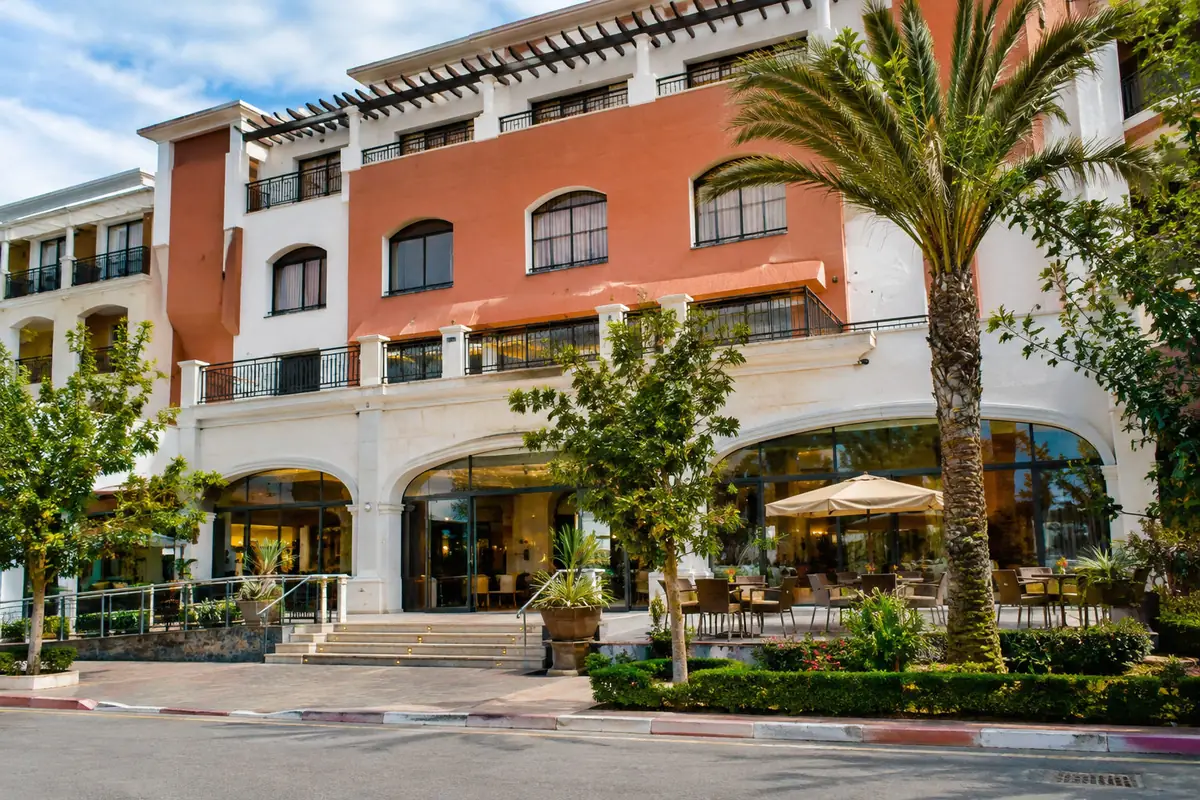
Bir El Ater is a town in the south of Tébessa province, roughly ninety kilometres south of the provincial capital and close to the Tunisian border. For Bir El Ater hotels, booking rooms and accommodation, the local choice is small and thinly documented online, and the guests are mostly business travellers tied to the phosphate works at Djebel Onk, plus a few passers-through and prehistory enthusiasts. Tébessa, the large neighbouring city, offers far more options. The steppe landscape is dry and open, very different from the towns of the north.
Hotel comparison for Algeria
Pick a city and a star rating, then run the search.
No hotel listed for this city yet.
Bir El Ater hotels: rooms and accommodation on the spot
Bir El Ater is a mining town of respectable size, yet it has no tourism calling. For hotels, caution is needed: we could not confirm online the exact name of an establishment in the municipality, and the large booking platforms list almost nothing there. It is best not to expect guaranteed availability.
What a town of this kind typically offers are simple structures: residences, small family-run hotels and rooms intended for visiting workers. Occupancy depends on the rhythm of mining activity and nearby worksites, so availability can vary from one week to the next.
The safest solution for a stay with a choice of categories is to sleep in Tébessa and drive or take a taxi to Bir El Ater. If you must spend the night on the spot, phone before leaving, ask for written confirmation of the room and check hot water, air conditioning or heating depending on the season.
Position in Tébessa province and near the border
The municipality lies in the far east of the country, in the southern part of Tébessa province, at the gates of the Sahara. It is roughly ninety kilometres from Tébessa, the nearest city with a real choice of services. To the south rise the Djebel Onk mountains, home to the largest phosphate deposit in the country.
The soil is dry and not very fertile, the vegetation sparse and dominated by tufts of alfa grass. This stony steppe explains the feeling of space and light, but also the contrast between day and night temperatures.
The closeness of the Tunisian frontier shaped the history of the area: until independence, a French engineer battalion guarded the Morice line, a barbed-wire barrier along the border. Today, Sonatrach gas pipelines also cross the territory. Visitors will mostly meet industrial convoys, ore lorries and construction vehicles.
Getting there: road, rail and Tébessa airport
The main access is by road from Tébessa, a city of around two hundred thousand people standing on the high plateaus some forty kilometres from the border. From Constantine, allow about four hours by road depending on traffic; there is no faster direct link.
Tébessa has an airport, Cheikh Larbi Tébessi, and the national carrier Air Algérie lists offers departing from the city. Its railway station, run by SNTF, connects among others Souk Ahras and Annaba, so you can reach the area by combining a train with a taxi to Bir El Ater.
Phosphates leave by rail towards the port of Annaba, but that line mainly serves freight. For passengers, the most practical option remains a taxi or a private vehicle from Tébessa. Avoid driving at night: long roads, heavy lorries, animals and sandstorms make driving more tiring than in daylight.
Tébessa next door: the simple place to sleep
Tébessa is the provincial capital and the city where hotels, restaurants, banks and administrative services are concentrated. Online booking options are more numerous there than anywhere in the southern part of the province, even though few big international names are present.
If you have an appointment in Bir El Ater, a night in Tébessa means an early drive, to adjust according to the state of the road. Leave yourself a margin, especially in winter, when mornings can be cool and misty at that altitude.
In Tébessa you can also handle practical errands: withdraw cash, refuel and buy essentials. Take time to see the city's Roman remains, which are well worth a detour if you have half a free day.
Booking rooms in the south: how it works
Booking in Bir El Ater is almost always done by phone or message, since such establishments rarely appear on booking sites. Ask for written confirmation giving the dates, the room, the included services and the cancellation terms, and keep it on your phone.
On arrival, identity papers are generally requested. Payment is often in cash, in Algerian dinars; bank cards are not accepted everywhere in small places, so plan ahead and ask which payment method is expected before you set out.
No platform can guarantee that a room will remain free. Business travellers are better off going through the company that invites them, since it often has arrangements with local hosts. If you arrive late, tell the establishment your arrival time to avoid finding a closed door.
A mining town: professional guests and phosphate
The economic life of Bir El Ater revolves around the phosphate workings of Djebel Onk, described as the largest in Algeria. Part of the ore is used locally, the rest is shipped by train to Annaba, a Mediterranean port roughly three hundred kilometres to the north.
This activity attracts engineers, technicians, hauliers and suppliers, who make up most of the lodging demand. Maintenance shutdowns, partner visits or the start of new worksites can suddenly fill the available capacity.
For a business trip it helps to clarify the practical points with the host company: site access, any permits, transport from Tébessa and the meeting place. Foreign visitors should check the applicable formalities in advance with their contact.
Heritage: the Aterian site and Roman remains
Bir El Ater gave its name to the Aterian, a Palaeolithic stone-tool industry of which the town is the type site. Fossils of early hominids have also been found in the region, which makes it a place of interest for prehistorians, although visitor facilities are scarce.
The Roman and Christian periods left traces: dried-up wells, a few villas and the ruins of a large oil mill. The ancient Vicus Aterii was a bishopric and survives today as a titular see of the Catholic Church.
For history lovers, a stop here fits into a wider itinerary around Tébessa, where Roman monuments are more visible. Respect the remains, take nothing away and ask locally before leaving the tracks, since the terrain is vast and poorly marked.
Climate and seasons: when to stay
The climate is steppe to desert: hot, dry summers and cool winters, with sometimes cold nights. The best periods are spring and autumn, when temperatures are less demanding for travel and field visits. In summer, favour early morning and the end of the day.
Wind can lift sand and dust; bring a scarf, sunglasses and a water reserve. In winter, dress warmly for the evening, since the altitude of the region and the lack of clouds make temperatures drop quickly.
During Ramadan, shop hours change and restaurants open later. Find out meal times in advance if you stay on the spot, and carry something to eat on the road.
Avoid the hottest hours of the day in summer and stop in shaded places when needed. In every season, water, fuel and a charged phone are essentials that should never be neglected, because services can be far apart on the long stretches between towns.
Bir El Ater hotels: practical advice for choosing well
Before leaving, clarify the purpose of the trip: a business visit, a passage between Tébessa and the south, or an interest in prehistory. Depending on the case, the best base may be Tébessa with a daily drive, or one night on the spot if the appointment time demands it.
Carry fuel, water, cash and a copy of your confirmations. Note the establishment's phone number and give your arrival time. Also check your mobile operator's coverage along the route.
Finally, be wary of vague listings: ask for the exact name, address and a contact before any deposit. Everyday security is comparable to other towns in the east of the country; caution and respect for local customs are enough, and it is wise to ask locally before moving away from the main roads, notably close to the border zone.
Frequently asked questions
Are there many hotels in Bir El Ater?
No, accommodation on the spot is limited and poorly listed online. The large neighbouring city, Tébessa, offers more choice, and many travellers sleep there before driving or taking a taxi to Bir El Ater.
How far is Bir El Ater from Tébessa?
Roughly ninety kilometres south of the provincial capital by road. Leave a margin for traffic, weather and the condition of the road surface.
Why do people go to Bir El Ater?
Mostly for the activity linked to the Djebel Onk phosphates, but also for its prehistoric importance, since the town gave its name to the Aterian. Tourism there remains very limited.
Further reading
- Wikipedia: Bir el Ater : Encyclopedia entry on Bir el Ater, the Djebel Onk phosphates and the Aterian site.
- Air Algérie : Official website of the national airline, with offers from Tébessa and Biskra.